
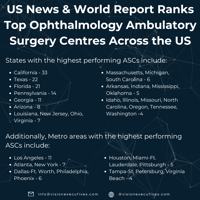
𝐔𝐒 𝐍𝐞𝐰𝐬 & 𝐖𝐨𝐫𝐥𝐝 𝐑𝐞𝐩𝐨𝐫𝐭 𝐑𝐚𝐧𝐤𝐬 𝐓𝐨𝐩 𝐎𝐩𝐡𝐭𝐡𝐚𝐥𝐦𝐨𝐥𝐨𝐠𝐲...
New global workforce data highlights persistent inequalities in access to eye care professionals.
A new global study has provided the most comprehensive picture yet of the eye care workforce, revealing continued growth across the sector while highlighting significant disparities in access to eye care professionals worldwide. The research, which analysed workforce data across ophthalmologists, optometrists and allied ophthalmic personnel, estimates that there are now 275,551 Ophthalmologists, 306,711 optometrists, and approximately 612,000 Allied Ophthalmic Personnel operating globally. While these figures reflect positive workforce growth, particularly in ophthalmology, the findings also underscore a critical challenge facing the sector: ensuring that eye care professionals are distributed where they are most needed.
Global Eye Care Workforce Continues to Expand
According to the study, the global ophthalmology workforce has increased by approximately 20% since 2015, reflecting ongoing investment in eye health services and professional training programmes. Across the global population, workforce density currently stands at:
- 34 Ophthalmologists per million people
- 39 Optometrists per million people
- 102 Allied Ophthalmic Personnel per million people
As demand for eye care continues to rise due to ageing populations, increasing rates of chronic disease and growing awareness of vision health, workforce expansion will remain a key priority for healthcare systems worldwide. However, headline growth figures only tell part of the story.
Workforce Distribution Remains Highly Concentrated
The study found that more than half of the world's eye care professionals are concentrated within a relatively small number of countries. For ophthalmology, 50% of the global workforce is located in just six countries:
- China
- India
- United States
- Brazil
- Russia
- Japan
Similarly, 50% of the global optometry workforce is concentrated in seven countries:
- United States
- India
- Germany
- United Kingdom
- Spain
- Japan
- China
This concentration highlights the ongoing imbalance in workforce distribution and raises important questions around access to eye care services in underserved regions.
Significant Differences in Workforce Density
The research also reveals substantial variation in workforce density between countries. Among the highest reported figures:
- Denmark recorded 623 Optometrists per million people.
- Greece recorded 165 Ophthalmologists per million people.
The United Kingdom reported 295 Optometrists per million people, significantly above the global average of 39 per million. While some countries benefit from highly developed eye care infrastructures, others continue to face severe workforce shortages that limit access to essential services.
Eye Care Access Remains Unequal
One of the most significant findings from the study is the disparity in workforce availability between high-income and low-income countries. High-income countries report:
- 76 Ophthalmologists per million people
- 150 Optometrists per million people
In contrast, low-income countries report:
- 4 Ophthalmologists per million people
- 4 Optometrists per million people
These figures illustrate a substantial workforce divide that continues to affect access to preventive eye care, diagnosis, and treatment services across many regions.
Countries Still Operating Without Eye Care Professionals
Despite growth in the global workforce, access gaps remain pronounced. The study found:
- 20 countries reported having no Optometrists
- Seven Pacific Island nations reported having no Ophthalmologists.
- Seven Sub-Saharan African countries reported fewer than one Ophthalmologist per million people.
- Seven Sub-Saharan African countries reported fewer than one Optometrist per million people.
These findings highlight the ongoing challenge of ensuring equitable access to eye care services and achieving global eye health objectives.
Addressing the Global Eye Care Workforce Challenge
As healthcare systems prepare for increasing demand driven by demographic and epidemiological trends, workforce planning is expected to play a critical role in the future of eye care. While growing the number of eye care professionals remains important, the study suggests that workforce distribution may represent an equally significant challenge. Improving training pathways, supporting workforce retention and expanding access to underserved communities will be essential to ensuring that eye care services remain accessible to populations worldwide. The latest data provides valuable insight into both the progress made and the work that remains. As the sector continues to evolve, addressing workforce inequalities will be central to improving access to eye care and reducing avoidable vision impairment on a global scale.